How delay time is calculated
One beat (a quarter note) lasts 60,000 divided by the tempo, in milliseconds. At 120 BPM that's 500 ms. Every other note value is a fraction of that beat: a dotted eighth is three quarters of it (375 ms), an eighth note is half (250 ms) and a quarter note triplet is two thirds (333.3 ms). The calculator does the math for any tempo.
How to set up a dotted eighth delay
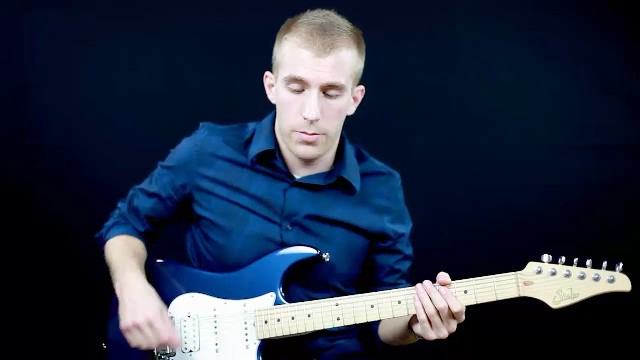
The dotted eighth is the most popular rhythmic delay in modern guitar music. This is the method Steve Hubbard teaches in his Dotted 8th Note Example lesson.
-
Set the delay time
With tap tempo, tap quarter notes along with the song and set the pedal's subdivision to dotted eighth. Without tap tempo, type the song's BPM into the calculator above and set the delay to the dotted eighth time in ms.
-
Keep the repeats and mix modest
A few repeats is plenty, and a lower mix keeps the echoes sitting behind your playing instead of burying it. Turn the feedback up and the parts start to smear into each other.
-
Play straight eighth notes
Play regular eighth notes over the delay. The repeats land in between your notes and create that busy, galloping rhythm. Steve suggests starting by just muting the strings and hitting them in time until you feel the gallop.
-
Keep your notes short
Cut your notes off and palm-mute them so the repeats have room. Steve's exercise puts this over a simple four-chord progression, with tab showing which notes to mute.
Delay times for common tempos
Quick reference in milliseconds. For any other tempo, use the calculator at the top of the page.
| BPM | Quarter | Dotted eighth | Eighth | Eighth triplet |
|---|---|---|---|---|
| 60 | 1,000 | 750 | 500 | 333.3 |
| 70 | 857.1 | 642.9 | 428.6 | 285.7 |
| 80 | 750 | 562.5 | 375 | 250 |
| 90 | 666.7 | 500 | 333.3 | 222.2 |
| 100 | 600 | 450 | 300 | 200 |
| 110 | 545.5 | 409.1 | 272.7 | 181.8 |
| 120 | 500 | 375 | 250 | 166.7 |
| 130 | 461.5 | 346.2 | 230.8 | 153.8 |
| 140 | 428.6 | 321.4 | 214.3 | 142.9 |
| 150 | 400 | 300 | 200 | 133.3 |
| 160 | 375 | 281.3 | 187.5 | 125 |
| 170 | 352.9 | 264.7 | 176.5 | 117.6 |
| 180 | 333.3 | 250 | 166.7 | 111.1 |
What the delay controls do
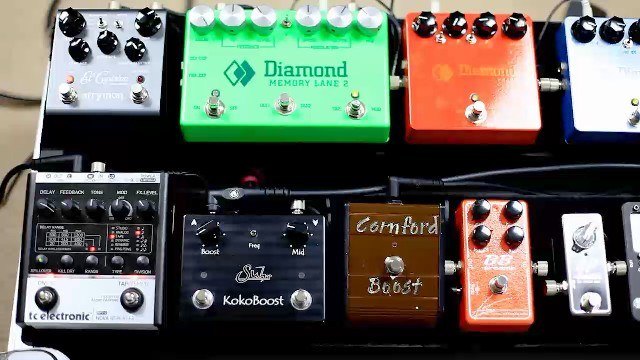
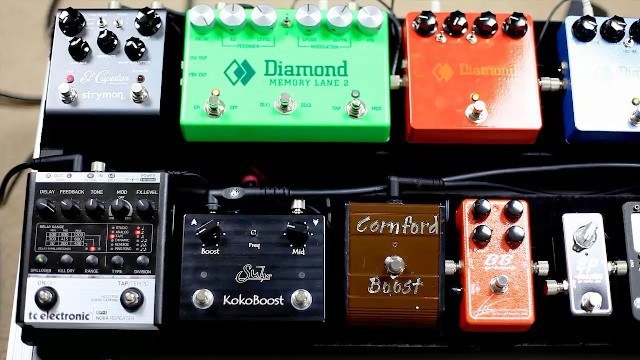
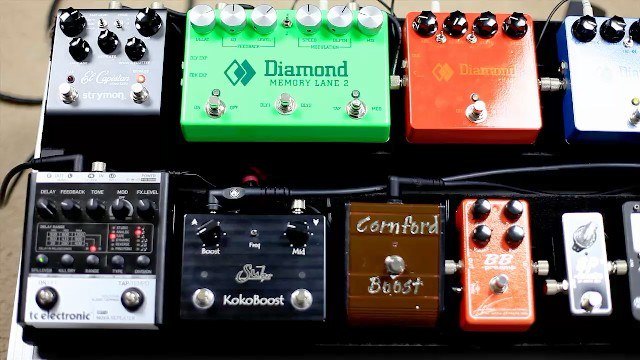
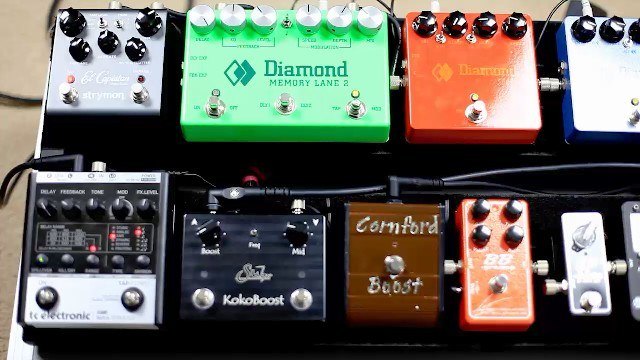
Every delay pedal names these a little differently, but they do the same jobs. Steve walks through them on real pedals in Technical Walkthrough Part 2.
- Delay or time. The gap between the note you play and its repeat. Short settings give a slapback, long ones a distinct echo.
- Mix or level. How loud the repeats are compared with your dry guitar.
- Feedback or repeats. How many times the echo repeats. Turned all the way up, many pedals feed back on themselves and build into runaway oscillation.
- Tone. Brightens or darkens only the repeats, not your dry sound.
- Tap tempo. Sets the delay time from your taps, so it locks to the song.
- Spillover. Lets the repeats ring out naturally when you switch the pedal off instead of cutting them dead.
Timeless vs rhythmic delay
A timeless delay isn't matched to the song's tempo. It's there to thicken leads and fill space, much like reverb, and in a band mix you might not even notice it's on. A rhythmic delay is set to a note value, like the dotted eighth or a quarter note, so the repeats become part of the groove.
The kind of delay also changes the sound. Digital delays give a clean copy of each note, analog delays are warm and get darker with each repeat, and tape delays are warm and often slightly wobbly from the tape. Steve compares all three in Technical Walkthrough Part 1.
Common questions
How do you calculate delay time from BPM?
Divide 60,000 by the tempo to get one quarter note in milliseconds. At 120 BPM that is 500 ms. Multiply by 0.75 for a dotted eighth (375 ms), divide by 2 for an eighth note (250 ms), and multiply by 2/3 for a quarter note triplet (333.3 ms).
What is a dotted eighth delay?
A delay set to three quarters of a beat. When you play straight eighth notes, each repeat lands between your notes, which gives the busy, galloping rhythm heard all over modern rock music. At 120 BPM it is 375 ms.
What delay time should I use for a dotted eighth?
It depends on the song tempo: 60,000 divided by the BPM, times 0.75. Common values are 450 ms at 100 BPM, 375 ms at 120 BPM and 321.4 ms at 140 BPM. If your pedal has tap tempo, tap quarter notes and set its subdivision to dotted eighth instead.
Why doesn't my delay line up with the song?
Usually the delay time doesn't match the tempo, or you tapped a different note value than your pedal expects. Check the song's real BPM with a metronome, then either type the exact time from the calculator or tap quarter notes with the subdivision set on the pedal.
How many repeats should a rhythmic delay have?
Keep the feedback fairly low for rhythmic parts, a few repeats, so they don't smear into the next chord. Turn the mix down until the repeats sit behind your playing instead of on top of it, then adjust by ear in the band.
What is the Hz column for?
Some modulation and tremolo settings use a rate in hertz, the number of cycles per second. The Hz value is 1,000 divided by the time in milliseconds, so you can sync those effects to the same note value.