
Style
Classical Guitar Lessons
Fingerstyle technique, classical pieces and reading music. Classical guitar lessons that build a solid foundation.
- 36 lessons
- 7 tutorials
- 1 instructor
- 1 hour of video
Popular Classical Tutorials
See all Mauro Giuliani - 120 Right Hand Studies
Rick Graham
 Classical Guitar Solo - 'Lagrima' by F. Tarrega
Rick Graham
Classical Guitar Solo - Gran Vals(Nokia Waltz)
Rick Graham
 Classical Guitar Solo - Romanza
Rick Graham
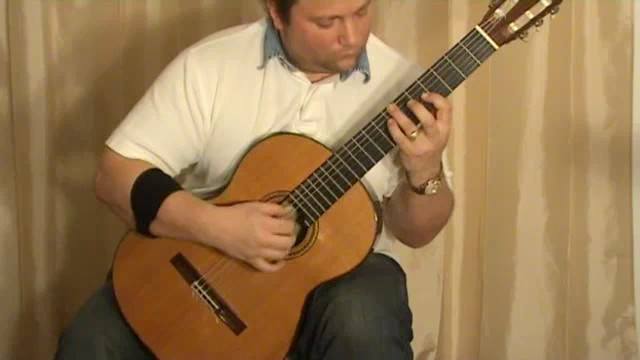 Classical Guitar Solo - Pavane by F.Tarrega
Rick Graham
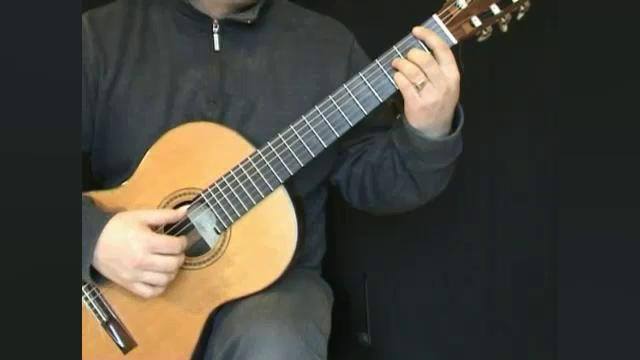 Mauro Giuliani's Studies op49 - No19
Rick Graham
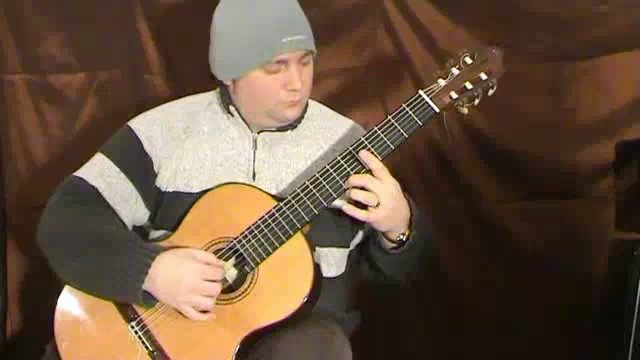 Classical Study in E minor
Rick Graham
Classical Learning Paths
See allWelcome! In today's lesson we will be studying the classical guitar solo written by Spanish composer/guitarist Francisco Tárrega (1852 - 1909). Tárrega is considered by many ...
Hey there and welcome to another lesson with me here at the web's coolest guitar instructional site! We will be looking at a very popular piece for classical guitar entitled 'Romanza'. Ther...
Hey there and welcome back to my continuing series of classical guitar pieces penned by Francisco Tarrega. In this lesson we will be looking at perhaps Tarrega's most recognised piece 'Gran...
Remember to apply the 4 techniques we discussed in the introductory lesson to each example. Take it nice and slowly, and be sure to observe any rests within the score as this will be an impo...
In today's lesson, we will be looking at a study written by Spanish composer/guitarist Francisco Tárrega (1852-1909). Tárrega is considered by many to have been responsible fo...
A very warm welcome to you for this continuation of pieces by the Spanish master Francisco Tarrega. For today's installment, we will be taking a look at Tarrega's "Pavane", which is one of ...
Hello and welcome to my new tutorial focusing on the 120 studies for the right hand written by virtuoso guitarist/composer Mauro Giuliani. Mauro Giuliani was born in the coastal village of ...
Hey there, Thanks for joining me! In this lesson we are going to be taking a look at one of Mauro Giuliani's well known op49 studies. No19 is my choice today. Lets take a look at the study i...
OK, let's take a look at the opening bars. The first thing that you should be aware of throughout the piece is to balance the bass movement, accompaniment, and melody. The use of rest strok...
Let's kick off with the first part of the study. Giuliani presents us with a variety of techniques within the piece so make sure you subdivide this section into smaller subsections so that ...
OK, what I think would be a great way of approaching this study would be to play each triplet pattern as a block chord, homophonically just to get those chord shapes under your belt. What I ...
This study is very simplistic harmonically, offering the briefest of excursions to the relative major in bars 11-12, while the remainder stays within the confines of E minor. From a technica...
Remember to apply the 4 techniques we discussed in the introductory lesson to each example. Take it nice and slowly, and be sure to observe any rests within the score as this will be an impo...
Remember to apply the 4 techniques we discussed in the introductory lesson to each example. Take it nice and slowly, and be sure to observe any rests within the score as this will be an impo...
Alrighty then, lets get started with part one. This piece is significantly more difficult to play in comparison with the pieces that we have studied thus far. In actual fact, 'Gran Vals' ha...
With this type of composition, I really feel that you must try and approach it in a very classy kind of way. Hmmm, what exactly do I mean by that? Well, Tarrega wrote quite a few of these sh...
For section 2, we have changed key from E major to E minor. I feel that this parallel key change lends itself to emotive composition and can be extremely effective. Again, make sure you bal...
Exactly the same practice technique can be employed for this section too. It will be a little more challenging however as some of the stretches required by the left hand may need specific pr...
The same principals apply to the second section as we discussed in the first section. During the rising and descending octaves section, it would be worth really emphasizing the dynamic eleme...
Remember to apply the 4 techniques we discussed in the introductory lesson to each example. Take it nice and slowly, and be sure to observe any rests within the score as this will be an impo...
Remember to apply the 4 techniques we discussed in the introductory lesson to each example. Take it nice and slowly, and be sure to observe any rests within the score as this will be an impo...
We have now modulated to the dominant of the original key which is E. The parts which will require the most practice will be the slurs with the left hand. As always, slow methodical practic...
Remember to apply the 4 techniques we discussed in the introductory lesson to each example. Take it nice and slowly, and be sure to observe any rests within the score as this will be an impo...
Remember to apply the 4 techniques we discussed in the introductory lesson to each example. Take it nice and slowly, and be sure to observe any rests within the score as this will be an impo...