
C# Minor 6 Guitar Chord (C#m6)

Root
The note the chord is built on and named after, like the A in A minor. Roots are the white dots on the neck.Chord type
Maj sounds bright and m (minor) sad. 7 adds a bluesy edge, maj7 and m7 sound smooth and jazzy, sus4 swaps the 3rd for a 4th, and 5 is the power chord rock is built on.- Space Play
- Left arrowRight arrow Root
- Up arrowDown arrow Chord type
Shape
Most chords can be played in more than one spot on the neck. Pick a shape to see it, then press play to hear it.Tone
Clean is a clean electric guitar sound. Distorted is the same chord through a cranked rock amp.Dots show
Fingers shows which finger goes on each note: 1 is your index finger, 4 your pinky. Notes shows the note names, and Intervals each note's job in the chord: R is the root, 3 the third, 5 the fifth.Adding A#, the major 6th, to C# minor gives you C#m6: C#, E, G# and A#. It's a moody, slightly exotic sound that works as the home chord in C# minor, and this version lets the open low E ring underneath.
How to play the C#m6 chord
- Put your 1st finger on the 1st fret of the A string (A#).
- Put your 3rd finger on the 2nd fret of the D string (E).
- Put your 2nd finger on the 1st fret of the G string (G#).
- Put your 4th finger (pinky) on the 2nd fret of the B string (C#).
- Let the low E string ring open (E).
- Keep the high E string quiet: let the edge of a fretting finger touch it lightly.
- Strum from the low E string down.
TipPut your 1st finger on the A string and your 2nd on the G string, both at the 1st fret, then your 3rd on the D string and your 4th on the B string at the 2nd fret. The fingers cross over each other a bit, so arch them high and keep the high E muted.
3 ways to play C#m6
Every shape below is a real C#m6, checked note by note: C#, E, G#, A# and nothing else. Easiest first, with the dark dot on the root.


C#m vs C#m6: hear the difference
C#m6 is C#m plus A# (the 6th). Play them back to back:
C#m6
C#EG#A#
Dark and mysterious
C#m
C#EG#
Darker and sadder
Chord progressions with C#m6
Chords make sense once you move between them. Press play to hear each progression with the real recordings, one chord per bar, then play along. Tap any chord to open its page.
Practice changing to C#m6
Switching chords cleanly is what makes a new chord usable in a song. Start the timer, then go back and forth between C#m6 and the chord you picked, strumming each one, and keep a count in your head. Your hands stay on the guitar the whole time. When it beeps, type in your count and try to beat it next time.
C#m6 to C#m
60seconds
-last try
-your best
Learn it with a teacher
Diagrams show you where your fingers go. A teacher shows you how to make it sound good. Start with these video lessons from the Infinite Guitar library:
 Exploring the Sixth - Introduction
Martin Miller
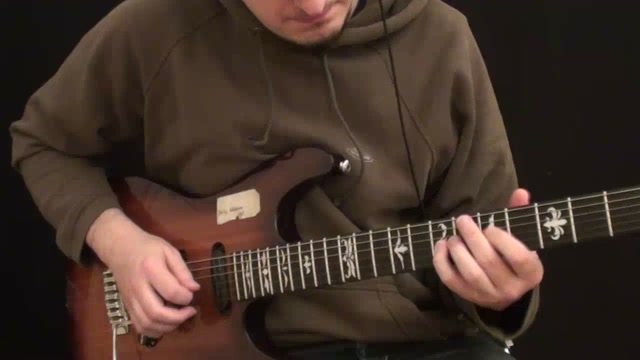 Exploring the Sixth - Static Chord
Martin Miller
 The Minor Chord
Free with an account · Mike Edwin
Access these lessons with a free account. No payment needed. Sign up free
Chords related to C#m6
Chords that go with C#m6
Scales to play over C#m6
Other C# chords
Other minor 6 chords
C#m6 chord FAQ
What notes are in a C#m6 chord?
C#m6 has 4 notes: C# (the root), E (the minor 3rd), G# (the 5th) and A# (the 6th). Every C#m6 shape on the guitar is those notes in a different order.
What is the difference between C#m and C#m6?
C#m6 is C#m plus A# (the 6th). Use the player above to hear both.
Is C#m6 hard to play?
No, it's one of the easier ones: 4 fingers and no barre, and the open strings do some of the work. Practice switching to it from a chord you already know.
How do you play C#m6 as a barre chord?
Barre the 11th fret with your 1st finger, using the D shape (x-x-11-13-11-12). That shape is movable: slide it up or down and it plays a minor 6 chord on every fret.
C#m6 or Dbm6?
They're the same chord with two names: C sharp and D flat are the same note. We use C#m6 because it's the name most songs and players use.