
Muting Techniques
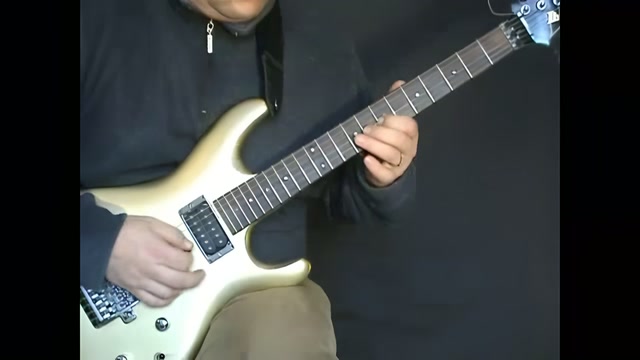
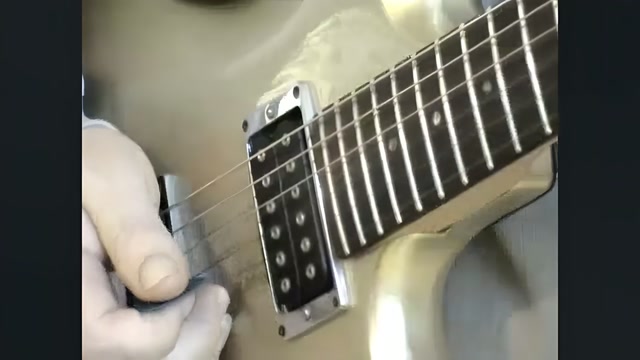
Welcome to this tutorial on Muting Technique! In this tutorial we will be taking a closer look at some various uses of muting for rock rhythm playing. First of is the good old palm muting we all know and love. When you read any rock tab in any guitar magazine, you are pretty much bound to see at least some parts marked P.M. However, there is not just one type of, or rather degree of, palm muting. For instance, you couldn’t use the same degree of palm muting to play say a tune by Deep Purple, as you would a tune by Pantera. In this first part we will look closer on how to vary your palm muting through right hand positioning and pressure. Palm muting as a technique in rock rhythm guitar playing has always been present, but was perhaps most firmly established in the 70’s, with bands like Black Sabbath, Deep Purple and Led Zeppelin. A common ground for most 70’s rock as far is muting goes is how “invisible” it tends to be in the music. That is, the muting is very loose and the hand is positioned just on top of the actual string saddles, right on top of the bridge. This, in combination with a medium amount of pressure, results in a palm mute that allows the string to ring significantly longer than what we are used to hearing in modern rock bands. It’s basically just one step above an open string, just slightly tightening up the riff or chord being played. As palm muting progressed and new rock styles came and went, so did the hand start to gravitate towards the neck, away from the bridge. This resulted in a “deader” string, with less and less ring to it. When you listen to bands like Iron Maiden or Metallica, there is quite a difference in the length of the tone when palm muting. It is much more staccato and aggressive. Some bands, like Meshuggah, took it even further in the 90’s, positioning the hand almost above the bridge pickup, and applying a larger amount of pressure on the string. This results in a very “metallic” attack, and a very, very staccato note. It is harder to explain the sonic result of these palm muting degrees than it is to show you, so just click play and get to work will ya! Also, make an effort to listen to bands from all decades and see how they sound. Also, try to play say a Metallica style riff, but with a looser palm muting, and you will drastically change the entire sound of the song. In closing, it is much more important to have the correct muting technique in order to achieve a certain riffing sound, than it is to have the same exact setup as the artist in question. For example, you would never be able to get the attack of Meshuggah’s older material without mastering the way the palm mute, regardless of what gear you use. As the old saying goes, “it’s all in the fingers”.. well, in this case you might say “it’s all in the palm of your hand” =) On to example 1 then. In this example I play a style of riff that might be found on a 70’s rock album. Many bands, like Purple, often played 4th-based rhythms, to create some harmonic distance between the guitar and the often present organ. Using a looser muting helps the sound authentic, and the harmonic structure of the riff, enables several instruments to co-exist without interfering with each other. Once you have example number 1 down, move on to the next one for a more modern sounding palm muting example.
10 Lessons
-
1
3:51
Lesson · 4m Muting Techniques - Intro & Example 1
Welcome to this tutorial on Muting Technique! In this tutorial we will be taking a closer look at some various uses of muting for rock rhythm playing. First of is the good old palm muting we all know and love...
Tab
-
2
 1:31
Lesson · 2m Muting Techniques - Example 2
Example number 2 then. Here I have moved the right hand a few millimeters (or fractions of an inch) closer to the neck, away from the bridge. I can still feel the bridge touching the outside of my palm. This...
Tab
-
3
 0:44
Lesson · 1m Muting Techniques - Example 3
Very well then, on to example number 3. Here I have chosen to play a riff more in the style of bands like Metalica. Less single note riffing, and more power chord based. Here I’m also alternating between...
Tab
-
4
 2:40
Lesson · 3m Muting Techniques - Example 4
In example number 4, we reach the end of the line. This is pretty much as far as you can go from the bridge without completely killing the string. Also, with a heavier pressure and muting, you also run the...
Tab
-
5
 3:06
Lesson · 3m Muting Techniques - Example 5a
Very well then. Example 5a! Examples 5-6 will all explore a technique I call “slap-muting”. This entails using your left hand, slapping on the strings while palm muting with your right hand. This creates a...
Tab
-
6
 1:28
Lesson · 1m Muting Techniques - Example 5b
Here comes the fun! In example 5b, I use the fingers of my left hand to slap and fill in the “gaps” so to speak. That is, where ever there is a rest in the riff from 5a, I will slap, thereby creating a...
Tab
-
7
 1:00
Lesson · 1m Muting Techniques - Example 6a
Example 6a is a riff from my FretDance (2003) album from a song called Road Less Travelled. On the original tune I use a drop-A tuned seven string guitar for some really heavy riffing. This type of slap-muting...
Tab
-
8
 1:10
Lesson · 1m Muting Techniques - Example 6b
Not much to say here really, just follow the same procedure as in example 5b and you will be fine. This rhythm is less consistent than example 5, and will thus be a bit trickier to nail at higher speeds, but...
Tab
-
9
 3:48
Lesson · 4m Muting Techniques - Example 7a
So what is Dividing Rhythm? Well, it’s just a phrase I use to describe the concept of splitting up a riff into several lines or “melodies”, almost like a classical fuge. What I do is that I allow some...
Tab
-
10
 3:59
Lesson · 4m Muting Techniques - Example 7b
Final example! Here I have the same exact notes and riff, but I mute out certain notes completely, whilst accentuating others (the upstrokes) but hitting them hard, not muting at all. This creates and...
Tab
More like this
 'Still Hurts' by Marco Sfogli
Rick Graham
Hey there Lads and Lasses and a very warm welcome to a special tutorial! Following on from my tutorial of the solo section of 'Andromeda' by Marco Sfogli, today's tutorial will be an in depth look at the full...
 "Play in the style of" Guthrie Govan
Rick Graham
Yo! and welcome to my latest tutorial this time focusing on the style and techniques of the amazing UK guitarist Guthrie Govan. This lesson was created with inspiration from the following: Blues Jam Tracks...
 Playing Vintage Guitars
Sean Conklin
I am completely new to the world of vintage guitars. But I decided to take a plunge recently and got a refinished 1960 Fender Strat, and I absolutely love it! I wrote a new song with it for this tutorial. You...
 Eric Johnson Triads
Martin Miller
Hey friends, Today we’ll be dealing with a concept that has been fascinating me ever since I came across it: wide interval triads á la Eric Johnson, Steve Morse, etc. Firstly, let’s look at how these...
 "Andromeda" by Marco Sfogli
Rick Graham
Hey all, thanks for joining me! In this tutorial we will be taking an in-depth look at the style of one of the finest emerging guitarists of our generation, Marco Sfogli. Born in 1980, Marco started playing...
 Advanced Patterns and Sequences
Rick Graham
Alrighty then! Let's get cracking on the first sequence. The whole sequence is based around the tonal centre of A dorian and while it is mainly diatonic, there are some additional passing notes present which...