
Dickey Betts
“Ramblin' Man” The Allman Brothers Band, 1973
The solo lines come from G major pentatonic, sometimes with the 4th (C) added for an even sweeter sound.
G major pentatonic · 2nd fret
Photo: SImone berna, CC BY 2.0, cropped

E♭ Major pentatonic
Take the major scale, drop the two notes that cause trouble, and you get the major pentatonic. It's five bright, happy notes that are hard to play wrong, and you hear it all over country, Southern rock, soul and pop.
The major pentatonic scale has five notes: the root, 2nd, 3rd, 5th and 6th. In G that's G, A, B, D and E. It leaves out the 4th and the 7th of the major scale, the two notes that sit a half step from a neighbor, so there are no half steps left and almost every note sounds good over a major chord.
On guitar it uses the same five box shapes as the minor pentatonic, just with a different root. G major pentatonic has exactly the same notes as E minor pentatonic. A handy trick: take your A minor pentatonic box at the 5th fret, slide it down three frets to the 2nd, and you're playing A major pentatonic.
Its formula is 1 2 3 5 6: root, 2nd, 3rd, 5th, 6th. Counted from one note to the next, that's a whole step, whole step, step and a half, whole step, step and a half.
Sweet, singable and a little country: these players made the major pentatonic the sound of Southern rock and soul. Each card shows the key of the song and where that box sits on the neck, so you can find it on your own guitar.
Bright, twangy lines with roots in country and bluegrass. Southern rock guitarists lean on the major pentatonic for solos that sound happy, not bluesy.
“Ramblin' Man” The Allman Brothers Band, 1973
The solo lines come from G major pentatonic, sometimes with the 4th (C) added for an even sweeter sound.
G major pentatonic · 2nd fret
Photo: SImone berna, CC BY 2.0, cropped

“Sweet Home Alabama” Lynyrd Skynyrd, 1974
The first solo is a country rock line built on G major pentatonic that resolves sweetly to G, played mostly in the box at the 12th fret.
G major pentatonic · 12th fret
Photo: MCA Records, public domain
Not every major pentatonic line is a fast solo. Some of the best known riffs and melodies are just these five notes played slowly and clearly.
“My Girl” The Temptations, 1964
Funk Brothers guitarist Robert White's intro walks straight up C major pentatonic from the 3rd fret, then plays the same idea in F over the F chord.
C major pentatonic · 3rd fret

“Wonderful Tonight” Solo artist, 1977
The main riff sits in seventh position and leans on G major pentatonic, leaving out the 7th for a simple, singing melody.
G major pentatonic · 7th fret
Photo: Majvdl, CC BY-SA 3.0, cropped
Here are all five boxes in G. Position 1 starts on the root on the low E string, and each next box starts a little further up the neck until the pattern repeats an octave higher. Press Show positions in the chart above to light each one up and hear it.
Same shapes, different starting fret. Find your key, then start position 1 at that fret on the low E string.
| Key | Notes | Position 1 starts at |
|---|---|---|
| A major pentatonic | A B C♯ E F♯ | 5th fret |
| B♭ major pentatonic | B♭ C D F G | 6th fret |
| B major pentatonic | B C♯ D♯ F♯ G♯ | 7th fret |
| C major pentatonic | C D E G A | 8th fret |
| D♭ major pentatonic | D♭ E♭ F A♭ B♭ | 9th fret |
| D major pentatonic | D E F♯ A B | 10th fret |
| E♭ major pentatonic | E♭ F G B♭ C | 11th fret |
| E major pentatonic | E F♯ G♯ B C♯ | Open strings (or the 12th fret) |
| F major pentatonic | F G A C D | 1st fret |
| F♯ major pentatonic | F♯ G♯ A♯ C♯ D♯ | 2nd fret |
| G major pentatonic | G A B D E | 3rd fret |
| A♭ major pentatonic | A♭ B♭ C E♭ F | 4th fret |
Solo with E♭ major pentatonic over these chords:
All of them are in the guitar scales chart, in every key.
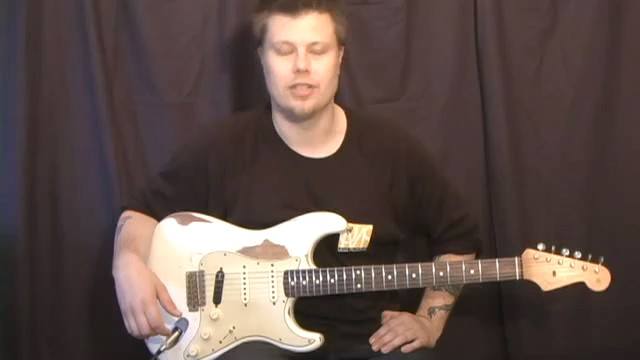
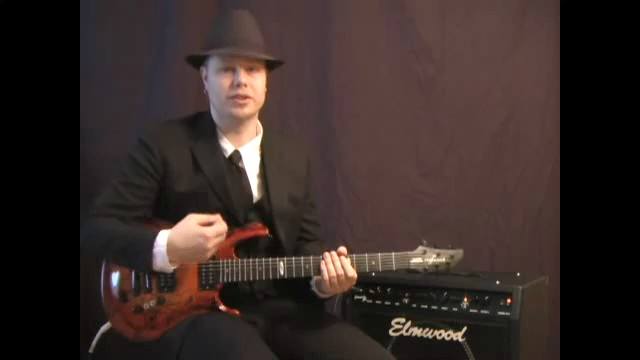
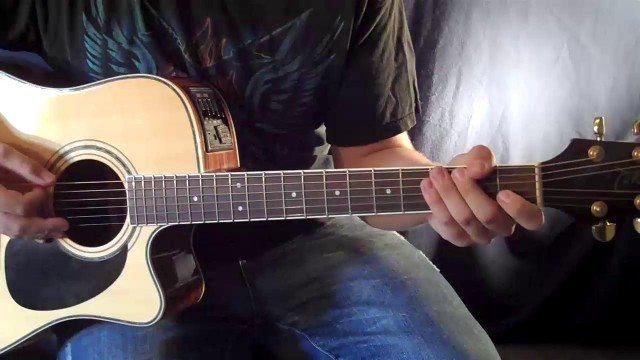
See it played and try it yourself with these video lessons from the Infinite Guitar library:
G, A, B, D and E. The table above lists the notes of the major pentatonic in all 12 keys.
Root, 2nd, 3rd, 5th and 6th (1 2 3 5 6). In steps from the root that's a whole step, a whole step, a step and a half, a whole step and a step and a half back to the root.
They use the same five shapes, but the root moves. Every major pentatonic has the same notes as the minor pentatonic three frets lower: C major and A minor pentatonic, or G major and E minor pentatonic.
Use it when you want a bright, sweet sound over major chords, like in country, Southern rock and soul. The minor pentatonic sounds bluesier and tougher over the same chords, and lots of players mix the two in one solo.
Slide it down three frets. Play the A minor pentatonic shape at the 2nd fret instead of the 5th and you're playing A major pentatonic. Same shape, three frets lower, and A is still the note you aim for.
We use them to run the site, see how it's used, and help with marketing. Change your mind anytime. Privacy policy