
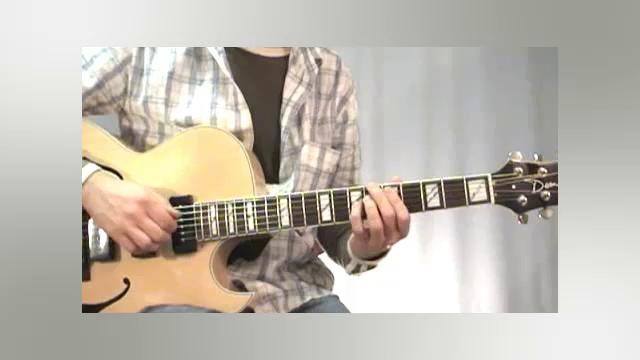
Dominant Inversions
Chord Inversions - What are they ?? An inversion is a name for a chord who's notes have been re-arranged. Lets start by looking at the Bb7 Chord. For each inversion I will give you a notated example of each chord as you might see it notated for a piano. This will make the inversion process more clear since pianos allow us to view notes in a more horizontal manner, unlike the guitar. I will then apply each inversion into a common voicing on the guitar. Example 1. Bb D F Ab Now. If we wanted to invert this chord we would start by moving the Root note 'Bb' somewhere other than the Root position. In other words, it will no longer be the bass note (lowest note) of our chord. Example 2. The First Inversion D F Ab Bb Here you see the 'Bb' bass note has been moved to the end of the chord and is now the highest note. Our Root note is now D. Since D is the 3rd of a Bb7 chord, we call this the 1st inversion. Example 3. The Second Inversion F Ab Bb D This process can be applied again. We can see that the D note has now been pushed to the end of chord and the F is now the lowest note, the bass note. We call this the Second Inversion. Example 4. The Third Inversion Ab Bb D F Lastly the Third Inversion. Following the same process we moved the F note to the end of the line and used Ab, our chords 7th degree, and made it the lowest note. This is called the Third Inversion. Any kind of chord can be inverted. Major, Minor, Dominant, Half Diminished ( aka min 7 b5 ) or even Diminished. However the Diminished chord is symmetrical and inverting this chord doesn't have quite the same impact. It is however an important topic and I will be discussing it in separate lessons. Take a moment to practice each of these inversions. Make sure you can recognize each of them by shape. It helps that they each have a unique shape so think about that and even have a go at applying them to different dominant chords...maybe a C7 or a G7. Then join me in the next lesson and we will continue the discussion.
5 Lessons
-
1
2:10
Lesson · 2m Chord Inversions - What are they?
Chord Inversions - What are they ?? An inversion is a name for a chord who's notes have been re-arranged. Lets start by looking at the Bb7 Chord. For each inversion I will give you a notated example of each...
Tab
-
2
 2:41
Lesson · 3m Dominant Inversions - 2nd Inversion
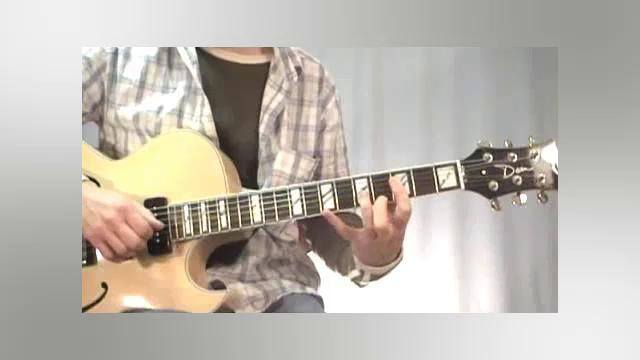
Dominant Inversions In this video, I will be giving you a demonstration on using the 2nd Inversion of a Dominant Chord. It is a short riff based on the first few bars of a I-IV-V blues progression. As we work...
Tab
-
3
 2:16
Lesson · 2m Dominant Inversions - 1st Inversion Pt.1
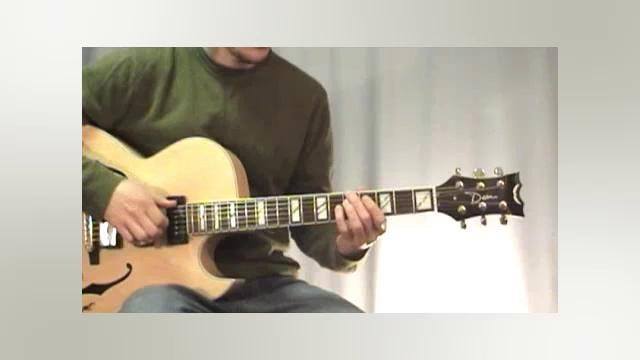
Dominant Inversions 1st Inversion Part 1. Enjoy our new riff!! This demonstration is showing us one possible scenario for using the 1st Inversion. After you have played through and made some sense of this...
Tab
-
4
 1:53
Lesson · 2m Dominant Inversions - 1st Inversion Pt.2
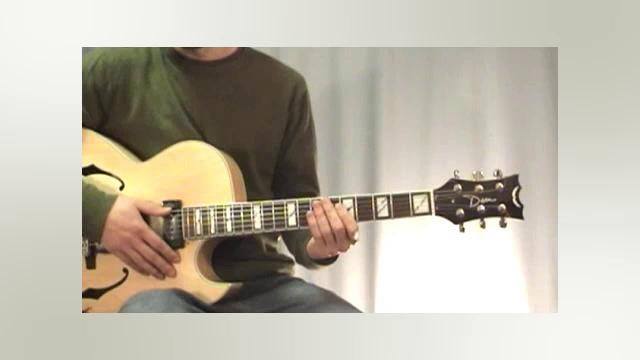
This video is a follow up to part1 of the first inversion study. Hence part2. All I want you to do here is take notice of the similarities between the first inversion and the half diminished chord(aka m7b5)...
Tab
-
5
 1:44
Lesson · 2m Chord Inversions - Accompanyment
Before breaking down this track I want to point out our 3rd Inversion. As we discussed earlier, the 3rd inversion is a voicing that begins with the 7th degree of the chord as the Root note(bass note) and as it...
Tab
More like this
 Minor Blues
Tom Quayle
Hi everyone! Welcome to this tutorial on the minor blues. The minor blues is much like our beloved standard blues in many ways. It contains 3 primary chords, is generally 12 bars long and doesn't follow our...
 Shell Voicings
Tom Quayle
Hi there everyone and welcome to this tutorial on Shell Voicings. Shell voicings are chords which contain the minimum number of voices or notes required to outline a particular harmonic sound. In other words...
 Sweep Picking as a Tool
Steve Hubbard
Hi folks! The main goal behind this tutorial, is to give you a number of sweep related licks that may be a bit less typical, to what you would normally play. If you have been using this technique for years...
 Exploring the Sixth
Martin Miller
Welcome to another tutorial! This time we’ll be dealing with an interval called the sixth. Just to give you a brief theoretic explanation: an interval is the distance of the pitches of two notes. The sixth...
 Funky Blues
Steve Hubbard
Hey guys! This tutorial will focus on a beginner 'Funky Blues' riff, and will also include a modified example, as well as a short lead run! As mentioned in the above video, some techniques that may stand out...
 Blues Rock Etude
Martin Miller
Hey IG! This is the first installment of a three-part series on the good ol’ Blues. We’re going to take three steps, so each of the three tutorials will deal with a different type of blues, increasing in...