




About Mike
Hey everyone! Welcome to Infinite Guitar!
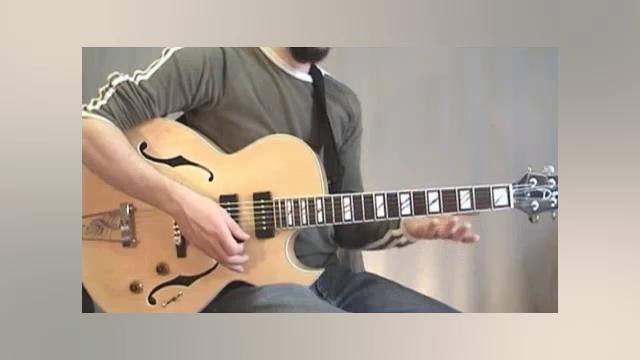
A little about me: My name is Mike, I’m 23 years old. I live in Melbourne Australia and live for the 6 string guitar, and I mean that literally. My life is completely consumed by music in one way or another. Being a full time student as well as a private teacher and a performer, there aren’t many hours in my life when I’m more than 15ft from the guitar. Since becoming a part of this website those hours have become significantly less too.
Much of my free hours are spent playing Jazz and Classical styles, but I do like to indulge in other forms of music. I also play a bit of piano and flute, but neither very well.
Some of the goals I hope to achieve with Infinite Guitar is to create a working collection of guitar lessons focused on topics such as improvisation, related theoretical discussions, technical development, and of course many examples of how we can apply these things in a practical way.
Along the way I will also be recording a collection of classical works for all skill levels.
So, have a browse through my guitar lessons, grab your axe and we can get right into it!
Mike's Music
Popular Tutorials by Mike
Improvisation 'The II-V-I'
Mike Edwin
Chord Substitutions
Mike Edwin
Rhythm Changes
Mike Edwin
What are Chords? - The Harmonized Major Scale
Mike Edwin
Joe Pass Style - Blues Chord Melody
Mike Edwin
 Know Your Major Scales
Mike Edwin
 Jazz Lines
Mike Edwin
 Dominant Inversions
Mike Edwin
 What Is This Thing Called Love?
Mike Edwin
 6/8 Blues - Miles Davis
Mike Edwin
 Symmetrical Scales
Mike Edwin
 Altered Chords Made Easy
Mike Edwin
Learning Paths with Mike
See allSave Lesson
Complete Lesson
Info
1:13
Scale Degrees. The term 'Degree' is used to identify a particular note in a scale. The point of using this terminology is that it can make life a whole lot easier when trying to identify ch...
Save Lesson
Complete Lesson
Info

Hello Guitar players. I hope you're ready to learn! During this tutorial we will be taking a close look at a number of intervals available to us within the Major scale. We will also be usin...
Save Lesson
Complete Lesson
Info
0:55
The Major Third. The Major third can be found by combining the first and third degrees of a major scale. You can create this harmony over any note by simply counting up 3 degrees of a majo...
Save Lesson
Complete Lesson
Info
1:12
Welcome Guitar Players! Over the next several lessons we are going to be looking at possible chord substitutions that can be used over a 'I Vi ii V' progression. To begin with, I want you ...
Save Lesson
Complete Lesson
Info
3:12
Building Major Chords is quite simple, and with this video I hope to show just that. We begin by picking the chord we want to build. In this case it will be a CMaj chord. Play the Major sc...
Save Lesson
Complete Lesson
Info
1:05
Alright, hopefully by now you have this chord progression well under your belt. The melody should be memorized, and all the chord voicings we looked at ought to be flowing when you play them...
Save Lesson
Complete Lesson
Info

6:14
Welcome to Part 1 of our tutorial on playing jazz standards. A form is a name used to describe the structure of the song. Two common forms in Jazz Standards are the 'AABA' and 'AABC' form....
Save Lesson
Complete Lesson
Info
1:00
Hello! and welcome to the Rhythm Changes. This tutorial will have two ends to it. Right now we are just going to learn a 32 bar solo. The solo will be broken up into two 16 bar segments for...
Save Lesson
Complete Lesson
Info
2:33
In this tutorial, I hope to enlighten you somewhat in the ways of improvisation. Particularly on the subject of outlining chords. We will be having a look at several short musical phrases an...
Save Lesson
Complete Lesson
Info
1:17
Guide Tones. Part 1 This lesson will contain a lot more discussion about chord tones used than the following, so be sure to read carefully. If there is anything you don't understand please...
Save Lesson
Complete Lesson
Info
1:24
Joe Pass Style Blues Guitar Joe Pass is arguably one of the most important and historically significant Jazz Guitar players, in line with the likes of Wes Montgomery and the great Charlie C...
Save Lesson
Complete Lesson
Info
1:20
As this tutorial is intended to be more of a guide to the various ways we can approach playing through a tune, as opposed to viewing the techniques from an analytical standpoint. I wont be e...
Save Lesson
Complete Lesson
Info
3:08
Before we start learning to play some lines and understanding what makes them tick, it is important we understand the concept of guide tones. A good improviser will always be able to 'outli...
Save Lesson
Complete Lesson
Info
1:18
Four to the bar swing, otherwise known as 'Gypsy Swing' or 'long short rhythm' is the most commonly used rhythm among traditional Jazz bands. This lesson will be focused on using this rhyth...
Save Lesson
Complete Lesson
Info
2:26
Chords! A chord is a series of notes played together. There are hundreds even thousands of chords available to play on the guitar. Once you begin to understand the essentials of building c...
Save Lesson
Complete Lesson
Info
1:29
Major Triad. The next interval we need to look at is our Perfect 5th. Otherwise represented as 'P5'. We can create this harmony by combining the first and 5th notes of any major scale. In ...
Save Lesson
Complete Lesson
Info
1:30
Welcome! Today we are looking at a Charlie Parker style approach to 12 bars of the blues. We are sticking to the more simplistic edge of his playing today but in the future ill be adding so...
Save Lesson
Complete Lesson
Info
0:41
Here are the first 16 bars of this solo. Be sure to play it with a steady swing and practice it slowly to begin with. Then up your tempo as you become more comfortable with it. Also, I hav...
Save Lesson
Complete Lesson
Info
2:04
The Major 7th. A Major 7 chord is built with the 1st, 3rd, 5th and 7th degrees of a major scale. At this point, I want to begin introducing chord formulas. The formula for our Major 7 chor...
Save Lesson
Complete Lesson
Info
0:49
What Is This Thing Called Love? A classic tune by the great composer, Cole Porter. In this video I will play a 32 bar solo through the chord changes to this song. Provided below is the ta...
Save Lesson
Complete Lesson
Info
2:43
Tonic Substitute The first substitution I want to introduce is called a 'tonic substitute'. It is also known to some as 'two to the right'. In the key of C Major there are 7 chords. That's...
Save Lesson
Complete Lesson
Info
1:43
Now for the scales. As you can see below we have a G major scale broken up into 5 Patterns. Each pattern has a corresponding voice of the G chord, one of each of the CAGED forms. The logic...
Save Lesson
Complete Lesson
Info

2:02
Voice leading is something every guitar player should have a basic understanding of, despite what style of music he or she plays. The basic idea behind voice leading is to create some form ...
(45 remaining)