
All Tutorials
Tutorial
The Basics of Miking an Amp
Steve Hubbard
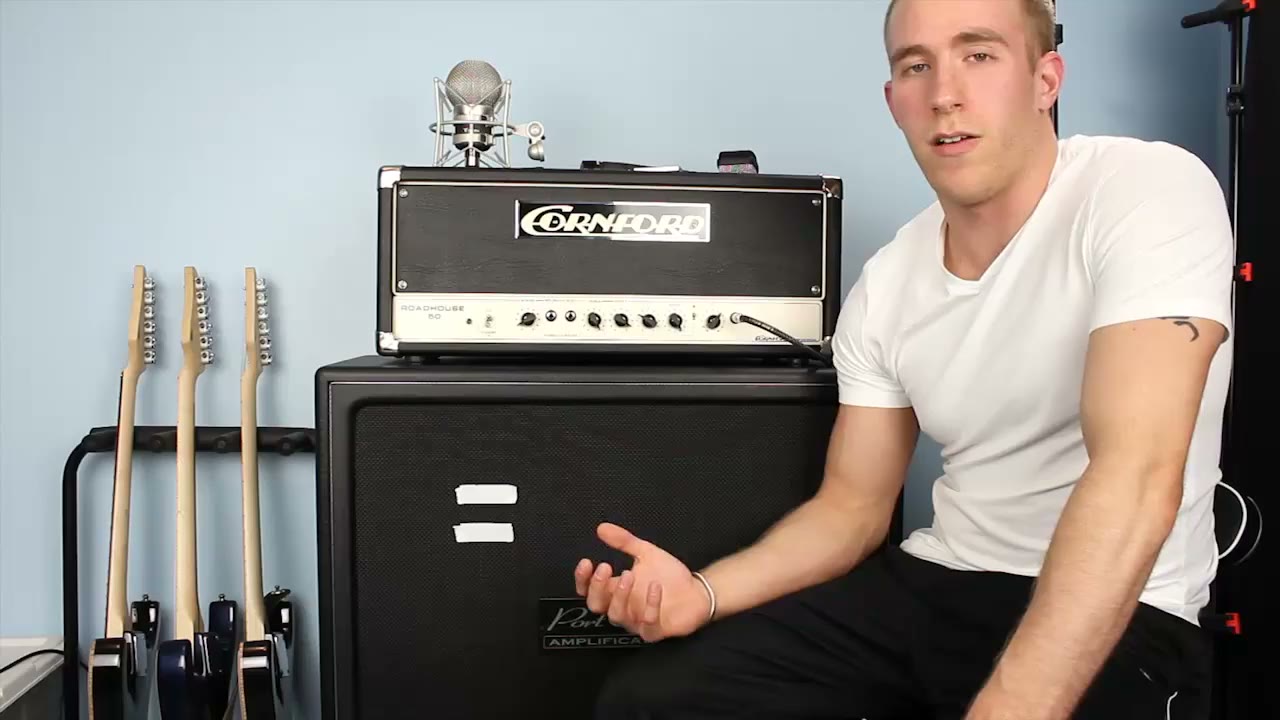
Hi guys, This tutorial focuses on some basic principles for miking a guitar amp, in both a live, and a studio situation. In each of the following videos, I'll include sound samples, to give you a proper understanding of the basic variations which can be achieved by changing the position of a microphone. I also provide tips and pointers, to help you get started. Quick tips: Dust Cap = Brightest point of speaker. As you towards the surround, the tone becomes warmer. Distance: Close will get you the least room noise, and the most low end. Backing away will add room noise, and reduce low end. Below is a simple diagram of the standard guitar speaker.
Unlock all 4 lessons
Premium includes every lesson, tab and backing track on the site.
See Premium Plans
4 Lessons
-
1
 8:15
Lesson · 8m The Basics of Miking an Amp - Overview
Hi guys, This tutorial focuses on some basic principles for miking a guitar amp, in both a live, and a studio situation. In each of the following videos, I'll include sound samples, to give you a proper...
-
2
 3:43
Lesson · 4m The Basics of Miking an Amp - Common Positions
Basic position variables: Location: Center, Off-Center, Edge Axis: On or off. Measurement of angle. Distance: Distance between speaker and micrphone. Samples, in order: Center, on axis Off-center, on axis...
-
3
 4:32
Lesson · 5m The Basics of Miking an Amp - Types of Microphones
Common types of microphones, for recording guitar amps: Dynamic: (Usually close miked, durable, standard for guitar amps/cabs. Ex: SM57) Ribbon: (Delicate, dark in tone, expensive, sensitive to room noise. Ex...
-
4
 5:04
Lesson · 5m The Basics of Miking an Amp - Final Demonstration
In this final clip, I spend a few minutes playing, and moving the microphone around. Hopefully by now, you have a clear understanding of the importance of mic position! Please provide feedback and requests for...
More like this
 Creating Backing Tracks
Tom Quayle
Hi there guys and welcome to this tutorial on creating backing tracks! We're going to be focusing on how I record my backing tracks with specific reference to the software I use and the plugins used to create...
 Recording With Impulse Responses
Tom Quayle
Hi there guys! Welcome to this months tutorial which is a slight departure from what you were probably expecting. First let me say that "Playing over Changes Part II' is coming your way next month but I wanted...
 In The Style Of Metallica
Chris Feener
Hey everyone! I'm amidst heavy rehearsals for a Metallica tribute gig, so I figured I'd share some insight as to how one would go about achieving Metallica's tone through one's rig, and through one's fingers...
 Getting Killer Guitar Tone for FREE
Richard Lundmark
Welcome to this tutorial on Getting Killer Guitar Tone for FREE! The idea for this tutorial sprung from me looking for good software-based tone that would allow me to only bring my guitar and a small laptop to...
 Using Cubase Recording Software
Pavel Denisjuk
Welcome to our first lesson in Cubase. Cubase covers a huge area of recording and editing your audio and MIDI tracks, so I will break it into small lessons and explain it part by part not to make it a boring...
 Recording Modern Metal
Mike Salow
Hello once again! Before I get into any details, I want to point out that this tutorial is a continuation of my last tutorial, Composing Modern Metal. This time we'll be discussing the concepts and simple...