

Timing and Note Value Alteration
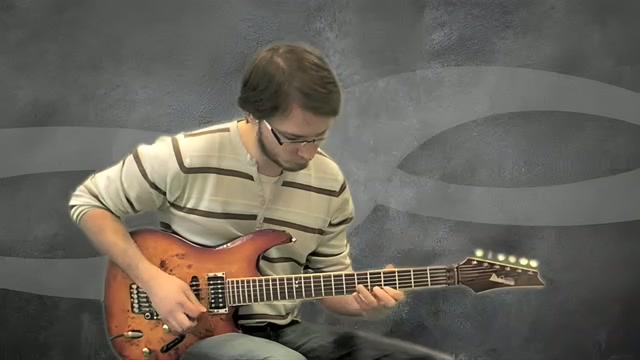
Welcome guitar slingers! The goal of the Timing and Note Value Alteration tutorial is to expand your improvisational and musical abilities drastically. When you apply these concepts, I can guarantee you that you improvisational skills in all styles will increase exponentially, and you will be that much closer to unlocking your full potential! Before launching head on into this tutorial, I must advice you to first backtrack and review my other improvisational tutorials in the right order (for the best results). The order in which they are supposed to be followed are: Unlocking the Fretboard Pentatonic Finder Note Targeting Timing and Note Value Alteration So what IS Timing? And what is Note Value Alteration? Most sources define timing as the concept of adjusting the timing of notes or beats in certain ways. The basic way of looking at timing is as the ability to play to a certain tempo, and not deviate from that tempo. To be "tight". This ability is fundamental to be able to play together with other musicians. Everyone have to be able to keep to a certain tempo, and play in unison with each other. However, there are also concepts such as "loose time", playing "ahead" or "behind" the beat. These are concepts most often found in Jazz. This mean that even though you know the fixed, exact tempo you're playing over, you choose to playing slightly against this, "rushing" ever so slightly, to create a feeling of tension and momentum in your playing. This is something that can take a lifetime to master, and must be practiced together with other musicians for full effect. Check out masters like John Coltrane (saxophone), Miles Davis (trumpet) or John Scofield (guitar) to experience this approach in real life. With this said, this specific approach is not something we will cover in this tutorial. For one thing, it is very, very hard to notate such playing and get the message across. The very best way to learn this is to listen and copy other musician’s ideas and lines, and then incorporating this in to your own playing. In this tutorial, we will work with much more practical concepts. This brings us to the concept of Note Value Alteration. What this entail is the ability to play any note value, over any tempo, The ability to “know” every note value and their inherit sound and feel, just like you currently “know” and “feel” the sound of a minor or major chord, or maybe know the sound and feel of the Dorian mode. You need to develop an EAR for timing and note value, just as you do for notes themselves. What will this do for you? Well, for starters, you will NEVER again find yourself playing over a tune, and feel that your licks and lines just doesn’t work. You will have the ability to instantly adjust any lines or idea to a suitable note value over the beat you are playing to. In the end you will be able to improvise as much with rhythms as with note choice or technique. THEN you will be well on your way to being a complete improviser! The concept of timing and note value alteration will also vastly increase your ability to cross genres, and assimilate other players style or ideas. As you will hear in the video, I also talk about what makes a good improviser, and why certain players just stick out more than others. I also talk about the “4 Pillars of Improvisation”. This in essence mean that you need to support and build your improvisational skills on 4 base pillars being Timing, Technique, Theory and Musical Ear . You don’t have to excel in all of these, but they must all be present to some extent to have balance. Also, the strength of each pillar differs between various musical styles. Say you play shred in a metal band. Then your strongest pillars would need to be Technique and Musical Ear (having fine tuned your ear to that specific style). Timing in that music would not need to be refined, you won’t be doing any complicated or extreme note value alterations. Say however you want to play fusion jazz. Then you would need Timing, Theory and Ear more than Technique. Your tech needs to be at the level that you can express what you want in that genre, not more. Say you wish to be a great blues player. Then too much "shred" type technique will actually mean you will sound less like a blues player. The combination and content of the 4 pillars, needs to be suited for your personal musical goals. Here more of my thoughts on this in the video. Before beginning though, there are some basics you need to cover. You need to have a thorough knowledge of note values, and the theory behind them. So, if you haven’t already I suggest you check out the following tutorials; Robert Mussatti’s Basic Music Theory tutorial, and also his Reading Music for Guitar tutorial. These are both good starting points that you really need to grasp if you are going to make the most out of this tutorial. Ok then, have you watched the intro vid as well? Good! Then see you on the next page for examples 1a-b.
14 Lessons
-
1
8:34
Lesson · 9m Timing and Note Value Alteration - Introduction
Welcome guitar slingers! The goal of the Timing and Note Value Alteration tutorial is to expand your improvisational and musical abilities drastically. When you apply these concepts, I can guarantee you that...
-
2
 2:30
Lesson · 3m Timing and Note Value Alteration - Example 1a-b
Very well then! Let's begin shall we? The first thing I will tell you is the no.1 commandment of timing practice! ALWAYS STOMP YOUR FOOT TO THE BEAT! This is extremely important to help in internalizing your...
-
3
 2:51
Lesson · 3m Timing and Note Value Alteration - Example 2a-c
So, on we go. Now that we have some major note values down, we can start exploring the possibilities of note value alteration. The first concept we will dive headlong into is to take any idea, and alternate...
-
4
 2:36
Lesson · 3m Timing and Note Value Alteration - Example 2d-e
So, on to example 2d then. In this example, I have mixed two note values within the same line; sixteen note triplets, and straight sixteen notes. You hear how much more random and musical this is starting to...
-
5
 3:09
Lesson · 3m Timing and Note Value Alteration - Example 3a-c
Now it’s time for some real excitement people! Let’s look into the concept of Rhythmic Superimposition shall we? Do you remember me ranting about Scale Superimposition in my Pentatonic Finder tutorial?...
-
6
 2:01
Lesson · 2m Timing and Note Value Alteration - Example 3d-e
Did you make it through? Warmed up yet are we? Sweet, let’s continue. One thing that most people don’t think about is that this concept is every bit as useful when it comes to riffing and rhythm guitar...
-
7
 1:58
Lesson · 2m Timing and Note Value Alteration - Example 4
Okay then, let's dive head first into example 4. What I've done here is I've taken the rhythmic figure from example 3a, and used it in improvisation. What you see below and in the video is me improvising over...
Tab
-
8
 2:11
Lesson · 2m Timing and Note Value Alteration - Part 5 Introduction
Ok, time to break out that tapping finger! Before cutting into this one, look at this video and the next one as I explain my view of, and approach to tapping. This could help you immensely when attempting...
-
9
 3:28
Lesson · 3m Timing and Note Value Alteration - Part 5 Tapping Intro
In this part, I discuss my approach to tapping more in-depth, and exemplify the technique I use. What I tend to do, is to tap upwards instead of downwards for several reasons. I find it more comfortable, and I...
-
10
 1:16
Lesson · 1m Timing and Note Value Alteration - Example 5a-c
First off, we have example 5a, where I have taken an E min pentatonic tapping lick (actually not strictly E pentatonic, since I’m starting off with F#, which is the major 2nd). Follow the advice given in the...
-
11
 4:25
Lesson · 4m Timing and Note Value Alteration - Example 5d
Then we come on to example 5d. Here I’m using Ninetuplets (nine-what now?). This might look intimidating at first glance, but is actually not much harder to play than triplets, same feel almost, just faster...
-
12
 2:32
Lesson · 3m Timing and Note Value Alteration - Example 5e-h
Next up is example 5e. This is another pentatonic tapping idea that I personally use a lot. You can see these types of thing in a real musical context in my Super Continental song tutorial. Same idea here in...
-
13
 2:06
Lesson · 2m Timing and Note Value Alteration - Example 6a
Here we are, the final section! What I will do here is similar to what I did in example 4. I will take the rhythm from one idea, and superimpose that over everything I improvise. So to begin with, here is...
-
14
 3:16
Lesson · 3m Timing and Note Value Alteration - Example 6b
And we're at the finish line!! Time for the outro impro. Here I have improvised with tapping over a drum beat, but kept the rhythm from example 6a, regardless of what I play. Try it on, analyze it and make it...
Tab
More like this
 Playing Over Changes
Tom Quayle
Hi there guys! Welcome to this tutorial on 'Playing Over Changes'. This is the idea of playing or improvising over a series of chords that change key every bar or other bar. We aren't going to be dealing with...
 Playing Outside
Tom Quayle
Hi Guys and Gals! Welcome to this months tutorial which is all based on 'outside' playing. Now I'm not suggesting that you all find a nice field somewhere and play in the fresh air. Rather the way in which...
 Playing Over Changes Pt 2
Tom Quayle
Hi there and welcome to part 2 of 'Playing over Changes'. This time we'll be dealing with melodic minor chords and their associated scale choices and also with motivic development over changes. For the purpose...
 Using Melodic Minor Scales
Tom Quayle
Hi Guys! Welcome to this tutorial on using Melodic Minor Scales. In this tutorial we'll be learning how to use melodic minor scales in conjunction with the major scales we already know in a harmonic context...
 "Play in the style of" Guthrie Govan
Rick Graham
Yo! and welcome to my latest tutorial this time focusing on the style and techniques of the amazing UK guitarist Guthrie Govan. This lesson was created with inspiration from the following: Blues Jam Tracks...
 Funky Fusion Song - Chasing a Beat
Tom Quayle
Hi guys! It's nearly Easter and winter is pretty much gone, so it's time for some funky sounds to prepare for the warmer weather! This tutorial is a song of mine from my upcoming album due to be released this...