

















What you'll learn
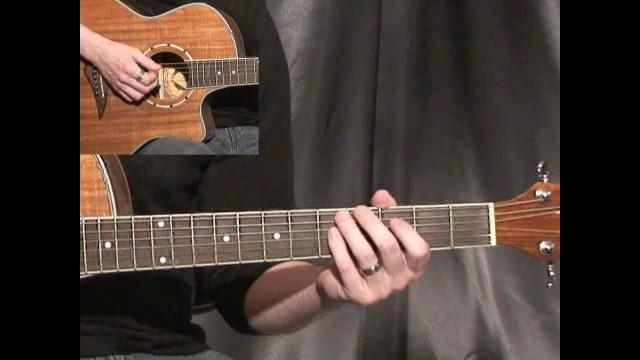
- Four six-string chord voicings for artificial harmonics: Bm7add4, Bbmaj7#4, C6/9 and C7b5.
- Why six-string voicings with wide gaps and lots of extensions give a nice harmonic depth and hide repeated notes.
- The spellings: Bbmaj7#4 as 1, #4, 7, 3, 5, 1, C6/9 as 1, 3, 6, 9, 1, and C7b5 as 1, b5, b7, 3, 1.
- These aren't typical comping chords, but they're a useful tool for solo guitar in a Tommy Emmanuel style and other genres.
- Acoustic versus electric: thicker acoustic strings are harder on the fretting hand, but the harmonics pop out more easily.
The chords that are used in this example are the following:
Bmin7add4
Bbmaj7#4
Cmaj69
C7b5
The voicings used within this example are not typical outside of this technique although they do have theoretical relevance.
The main thing to note about these voicings is the construction.
It is important to use voicings which utilize all 6 strings when working with this technique.
Yes, it's possible to use voicings with only 5, 4, or 3 strings, but the 6 string voicings create a very nice harmonic depth.