

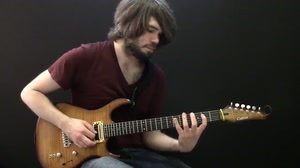

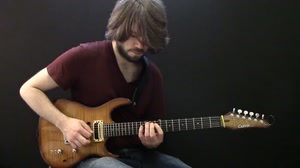
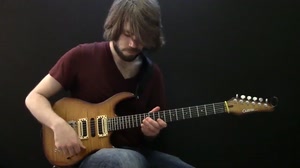


What you'll learn
- The F#m7 arpeggio off the 14th fret, barred with the second finger.
- The G#m7b5 (half diminished) arpeggio, which starts with the 4th finger instead of the 3rd finger like the others.
- Practicing arpeggios diatonically from each note of the A major scale: A, B, C#, D, E, F#, G#.
- The diatonic 7th chord sequence: maj7, m7, m7, maj7, dom7, m7, m7b5.
- Practice them extremely slowly and work them up to speed.
The final 2 arpeggios!
The F#minor7 is nothing new shape wise, so no explanation needed there.
The G#minor7b5 arpeggio will use a different fingering in the left hand.
Every other arpeggio we have started with our third finger but in this case it is best to use your 4th finger to start.
Besides that, the rest of the arpeggio is fingered the same as the major 7 and dominant 7 arpeggios.
Final thought: make sure to practice these extremely slow (like anything else) and work them up to speed.