



















What you'll learn
- The same string skipping arpeggio sequence from Part 5, now with a superimposed shuffle rhythm.
- Keep that rhythm going wherever you go on the fretboard, so the arpeggios become usable in improvisation rather than just a technique exercise.
- Change the length of the line, for example shortening it, to expand your rhythmic vocabulary.
- Other uses for string skipping: pentatonics, country and blues, and spicing up familiar blues licks by shifting notes by an octave within the line.
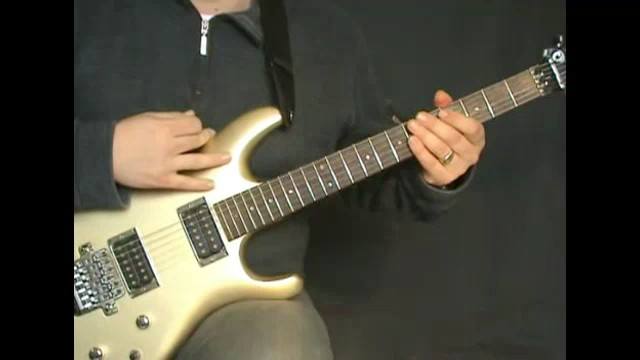
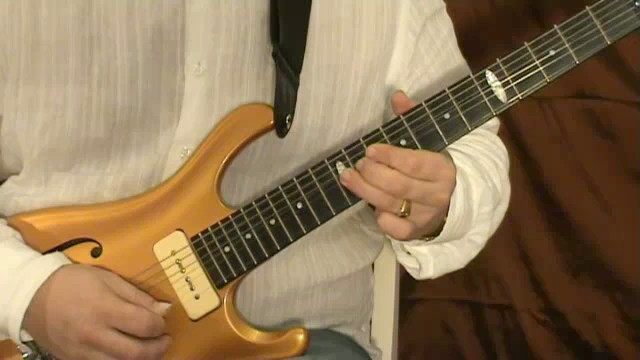
This final example is the exact same sequence as in Part 5, but with a superimposed shuffle rhythm.
The idea is to try to keep that rhythm going whatever you do, or wherever you go on the fretboard. This will REALLY free up your improvisation, and your use of all these arpeggios in soloing. Once you've nailed this, check out my other tutorials on timing and note value alteration for a real challenge.
Keep it up, and I'll see you in a future tutorial!