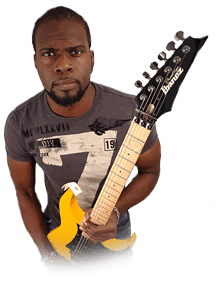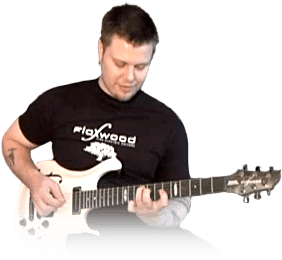

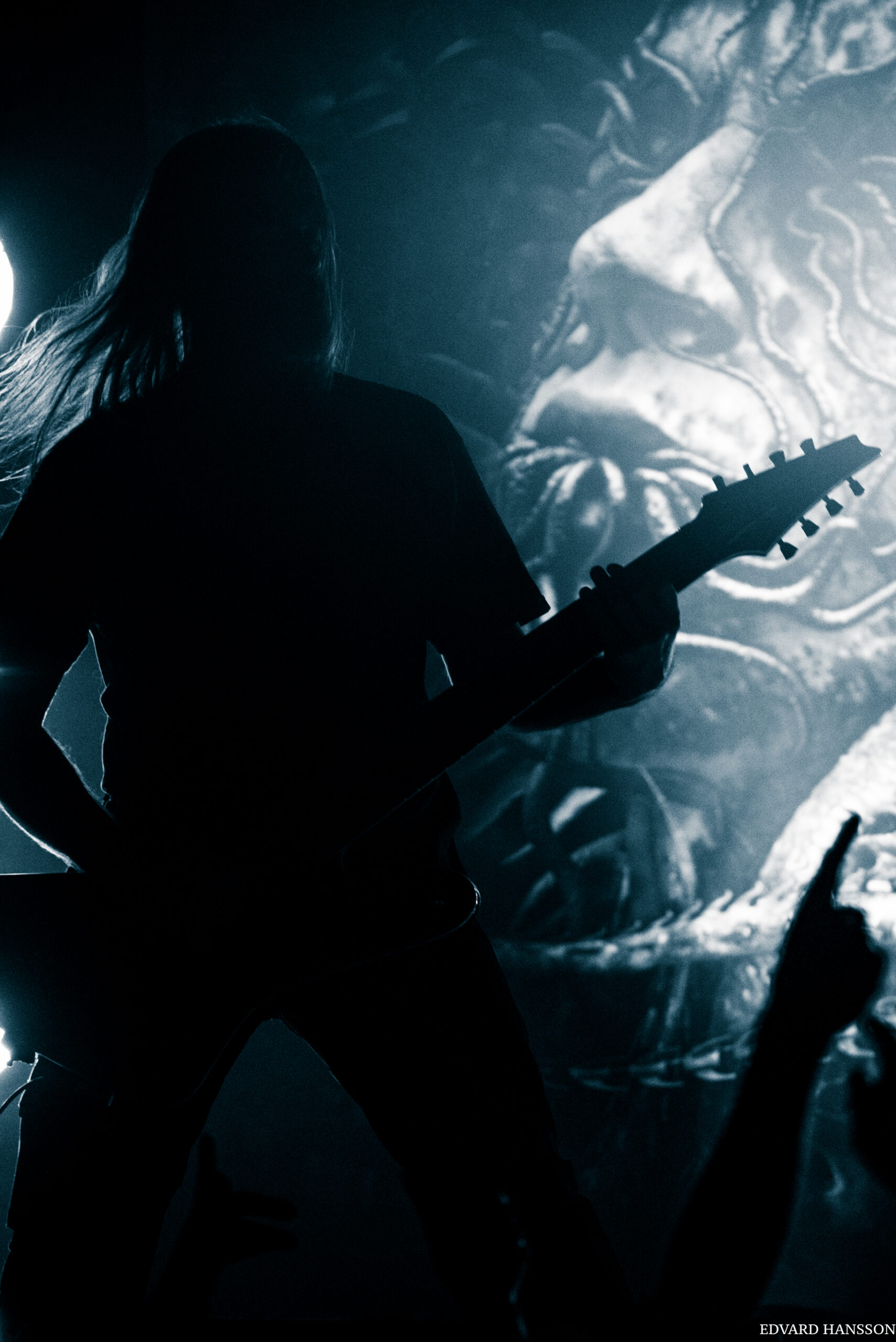
Djent is the only metal style named after a noise. Say it out loud: “djent.” That’s it! That’s the sound. A tight, palm-muted, high-gain chord that stops dead the instant it’s done. It’s also one of the most argued-about words in metal, which is impressive for something that started as a drunk guy trying to describe his guitar tone as you’ll read below.
This article will go over what djent actually is, where the word came from, what makes the tone, and the part most explainers skip: how the rhythms work and how to play them.
Where the word came from
Blame Meshuggah. According to the band’s Mårten Hagström, it goes back to lead guitarist Fredrik Thordendal, a few drinks in, trying to explain to a fan the guitar sound the band was always chasing. He kept making the noise, “dj… dj… dj…”, and the fan figured it must be a Swedish word. Djent. In a 2018 interview reported by Metal Hammer, Hagström called the whole thing “a drunk misunderstanding” and apologized for creating the genre. “Our bad.”
The word then took on a life of its own in online guitar forums in the mid-2000s. Guitar World traces it to players like Misha Mansoor (Periphery), Acle Kahney (Tesseract) and Paul Ortiz (Chimp Spanner) obsessing over Meshuggah’s tone, trading tips on how to get it, and posting their own riffs. Mansoor in particular is the name most people connect with spreading the word, which is how Chris Feener puts it in the intro to his Djent Series.
Is djent a genre?
People have been fighting about this for nearly twenty years. Periphery even named an album Djent Is Not a Genre, which is the most Periphery way possible to settle an argument. Mansoor himself is pretty relaxed about it: he’s told Guitar World that fans name genres, the label stuck, and if it helps people find the music, fine. Meshuggah, for their part, just call what they do heavy experimental music and leave the labels to everyone else.
Our take: call it a genre, a sound or a technique, nobody’s checking. If it chugs in odd groupings over a steady beat and the silences are as loud as the notes, you know it when you hear it.
The bands to know
Meshuggah
The forefathers, even though they’ve never called themselves a djent band. Mechanical, grinding riffs that seem to ignore the bar line, over Tomas Haake drum grooves that refuse to budge. “Bleed” is the go-to example of their machine-gun picking, and it’s a common workout for anyone building djent stamina. Good luck. Bring snacks.
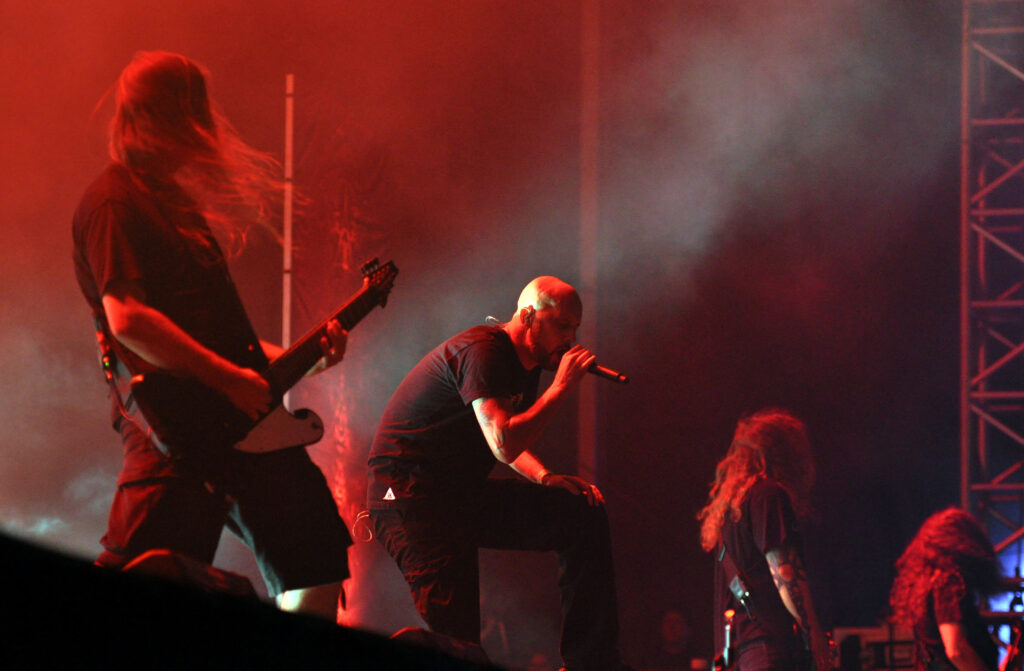
Periphery and Misha Mansoor
Mansoor took that template and ran with it: odd-grouped riffs, huge clean choruses, jazz and electronic flavors, and solos that actually go somewhere. Periphery calls itself prog metal, which is fair, but it’s hard to talk about djent for more than ten seconds without them coming up. Mansoor also had a big part in making extended-range guitars normal. Back when he started, getting a seven-string meant ordering a custom one from a builder. Djent is a big reason that’s no longer the case.

Everyone else
Tesseract (polymetric riffs and glassy cleans), Animals as Leaders (Tosin Abasi’s eight-string wizardry), Chimp Spanner, SikTh, Monuments and The Contortionist all sit somewhere on the djent map. Start with Meshuggah and Periphery, then fall down the rabbit hole.
The rhythm is the whole point
The tone gets the attention, but the rhythm is what makes djent djent. The core trick is simple to say and tricky to feel: the drums stay in plain 4/4 while the guitar loops a riff of an odd length on top. The guitar pattern and the bar line keep drifting apart, so the riff lands on a different beat each time around, until the two finally line up again. That push and pull is the groove.
That’s a polymeter, and it’s exactly what Chris Feener drills in Djent Series Part 1: “Even-Odd” Pulses. His first exercise, Pulse of 5, is four eighth notes and a rest, repeated over four bars of 4/4. Here’s what that looks like (X is a palm-muted hit, a dot is a dead silent rest):
Count: | 1 & 2 & 3 & 4 & | 1 & 2 & 3 & 4 & | 1 & 2 & 3 & 4 & | 1 & 2 & 3 & 4 & |
Riff:  | X X X X . X X X | X . X X X X . X | X X X . X X X X | . X X X X . X X |
Four bars of 4/4 hold 32 eighth notes. The 5-note pattern fits six times (30 notes), and the two extra hits at the very end square it back up so the riff resets with the drums. Count the rest as part of the group, because the silence is what completes the five. Feener then stretches the same idea to a pulse of 7 and a pulse of 9, each with a riff version that actually sounds like music, and the lesson comes with drum backing tracks so you can feel the drift for real.
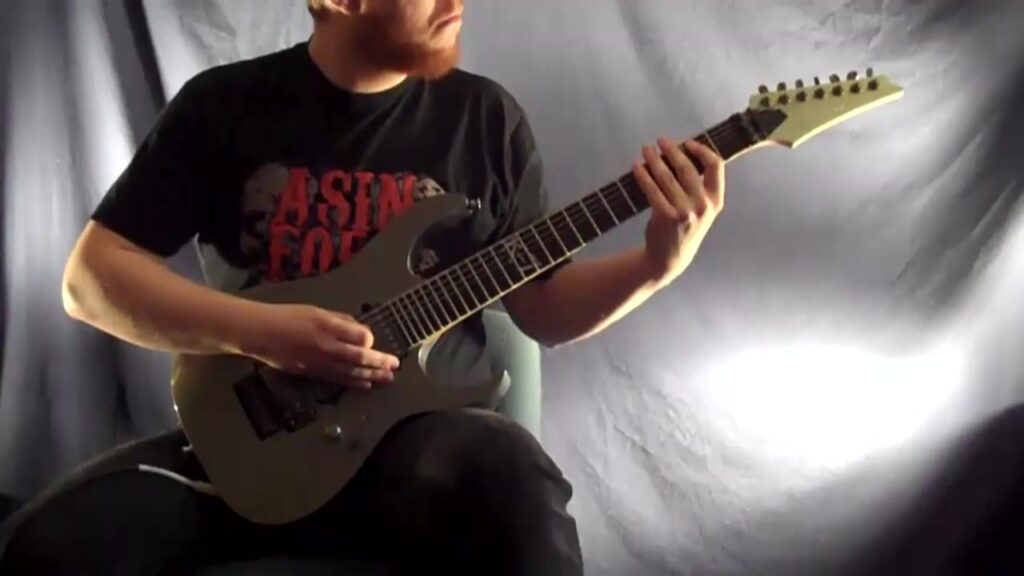
From there, his Pattern Approach nests groupings inside groupings, and Part 2 goes after rhythmic displacement and a pretty evil 17/16 pulse over 4/4. If you want the lead-playing side of the same idea, his Creating Your Own Pulse series applies polymeters to soloing.
Practice tip: put the drum track or our free online metronome on plain 4/4, accent beat 1 so you always hear where the bar starts, and count out loud. The moment you stop counting, the riff will eat you.
Djent before djent: the classical connection
Here’s the fun twist. Steady pulse, accents landing where you don’t expect them, a short pattern hammered over and over: that recipe is about a century older than the word.
- Stravinsky, The Rite of Spring (1913). The “Augurs of Spring” section is built on a repeating rhythm where the emphasis keeps jumping around, so the pounding never settles into a predictable pattern. Swap the strings for a seven-string and a Recto and it’s not that far off a Meshuggah riff. The Paris premiere famously turned into one of the biggest scandals in music history, with the crowd yelling over the orchestra. So yes, people were losing it over off-kilter riffs in 1913 too.
- Holst, “Mars, the Bringer of War” from The Planets, finished in 1914. The whole thing rides on a relentless 5/4 ostinato, with the string section striking the strings with the wooden stick of the bow for a dry, clicky attack. Odd meter, repeated pattern, percussive strings. Sound familiar? Metal already owes Mars a debt, too: Classical Music magazine counts it as the inspiration for the riff in Black Sabbath’s song “Black Sabbath.”
Nobody’s saying Stravinsky was secretly a djent kid. But the core idea, a repeating figure that fights the meter around it, is a lot older than forums and amp sims. Djent just added palm mutes and about 400 dB of gain.
The tone
The djent rhythm tone is tight, high-gain and mid-heavy, with nothing flabby in the low end. Guitar World’s breakdown, with input from Tesseract’s Acle Kahney, points out that the classic djent chord is a power chord with one more fifth piled on top, and that the scene was built by players chasing big tones on cheap gear and early amp modelers.
Chris Feener lays out his own chain in Djent Series Part 1: Guitar Tone: compressor, gate, drive, amp, EQ, cab, EQ. The short version:
- Compressor for attack and definition.
- Noise gate so the silences are actually silent. This is half the sound.
- An amp that stays clear when it’s heavily distorted. Feener uses a Mesa Boogie Dual Rectifier live and the Recto model on his Axe-Fx.
- EQ that rolls off the extreme lows and highs and boosts the low and high mids.
You don’t need his exact rig. A boost or EQ pedal in front of the amp to cut the mud does a lot of the work, which is a big part of why the style grew up in bedrooms instead of fancy studios.
Guitars and tunings
Seven- and eight-string guitars are the classic djent weapons, but plenty of djent gets played on six strings in drop tunings. Feener’s demos use a seven-string tuned down a half step, and his backing tracks are drums only, so you can play the riffs in whatever tuning you’ve got. In Al Joseph’s Djent Grooves: Tuning, Noise Gate, Gear, he uses a low A tuning and a noise gate with a slow attack and release for that tight, clipped sound.
How to actually play it
From Feener’s Djent Series Part 1: Technique, here’s what both hands need to do:
- Picking hand: on or off. Pick hard, because some of the harmonics that make the sound only show up when you dig in. Then choke the note with your palm the instant it’s done. When the riff rests, there should be zero noise. Think strobe light, not dimmer switch.
- Fretting hand: mute everything. Flatten your fingers across all the strings in the gaps between notes. Every guitar and amp has its own sweet spot for this, so expect some feedback squeals while you find it.
- Count everything. Odd groupings over 4/4 fall apart the second you guess. Count out loud until you can feel where the riff resets.
Then go play riffs. Al Joseph’s Djent Grooves gives you three full djent-style tracks to learn plus versions without guitar to jam over. And when you want to put a lead on top, Sean Conklin’s Melodic Lead over Djent is a fun one at 187 bpm. Your hands will hate it for a day, then love it forever.
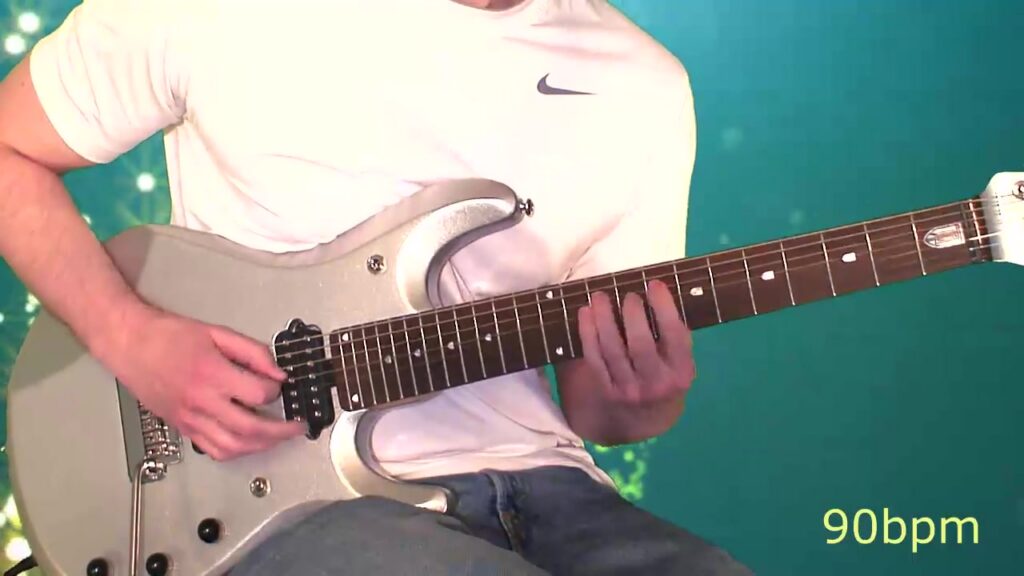
Djent looks like a tone thing from the outside. It’s really a rhythm thing with a great tone. Get the counting right, keep the silences silent, and the “djent” takes care of itself. See you on the fretboard!