

Time Feel - Working your Internal Metronome
Hi guys! Welcome to this tutorial - a lesson all about developing your internal metronome and time feel. Time in music is without a doubt the most important aspect of your playing. This has been demonstrated most graphically in my mind by guitarist Scott Henderson. He presents the idea that a tune can be understood and recognised without any need to play the correct notes, only the correct rhythm. Try playing a well known nursery rhyme or childrens tune to a friend and play completely the wrong notes but the correct rhythm and you'll usually find they recognise the tune on the first hearing. I've demonstrated this in the video for you with some very famous melodies. This is a similar idea to the notion that we can recognise words when only the first and last letter are correct but the middle of the word is jumbled up. The rhythm is the LEAST amount of information we need to recognise a musical idea. This goes a long way to demonstrate how important rhythm is in music and is an idea we've come across before with outside playing where we relyed on rhythmic phrasing to FORCE an idea to fit even when it bears little relation to the source material. Today we're going to look at developing your time feel and rhythmic awareness by developing what I call your Internal Metronome. This is a direct representation of how you percieve time in terms of beats and bars internally. We'll be using a metronome of some description here to fill in only certain beats. Your internal metronome must fill in the gaps as accurately as possible in order to stay 'locked' to the pulse of the physical metronome in front of you. The larger the gaps between the physical metronome's beats the harder it is for your internal metronome to compensate and the harder it must work to percieve the time inbetween each beat. If you don't own a metronome have a search on google for an online metronome and a multitude of options will appear. By practicing in this way you will develop a fantastic sense of internal time and an awesome base from which to build your rhythmic vocabulary. The exercises are primarily aimed at Jazz and Fusion players but you could use this concept in any style - simply alter the chords to suit or use a lead guitar phrase etc. It's very customisable in this respect. Before we move onto the exercises though, we need to check that you're comfortable playing both on and off the beat whilst feeling the tempo with your internal metronome. Move onto the next exercise and we'll check out your strengths on this fundamental aspect of music. Good luck! Tom
12 Lessons
-
1
 2:49
Lesson · 3m Time Feel and your Internal Metronome - Intro
Hi guys! Welcome to this tutorial - a lesson all about developing your internal metronome and time feel. Time in music is without a doubt the most important aspect of your playing. This has been demonstrated...
-
2
 1:56
Lesson · 2m Time Feel - Exercise 1: Explanation
Right - Here we go! The first thing we'll need to be able to do is to play both on and off the beat whilst feeling each beat of the bar with your internal metronome. To demonstrate this, here's a visual...
Tab Guitar Pro
-
3
 0:35
Lesson · 1m Time Feel - Exercise 1: Demonstration
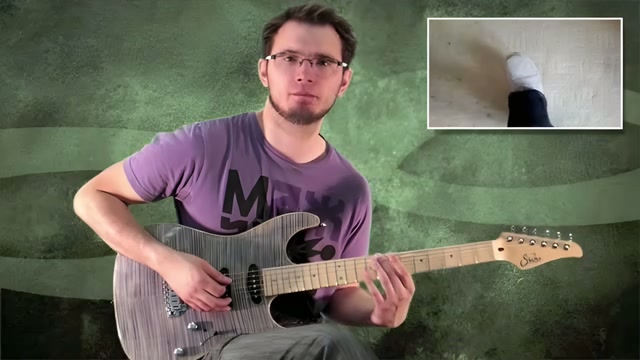
Here's a demonstration of Exercise 1. In the video my metronome is set to 82bpm. Refer to the TAB if you're confused in any way and tap your foot at all times throughout this exercise.
Tab Guitar Pro
-
4
 1:52
Lesson · 2m Time Feel - Exercise 2: Explanation
Okay, hopefully you were coping well with that last lesson. In the previous exercise our physical metronome and internal metronome were playing on every beat in the bar. The premise of the remaining exercises...
Tab Guitar Pro
-
5
 0:32
Lesson · 1m Time Feel - Exercise 2: Demonstration
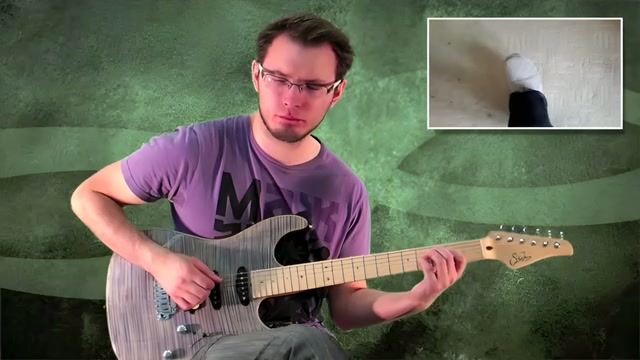
Here's the video demonstration of Exercise 2. Metronome is set up at 82 bpm on beats 2 and 4 giving me a perceived tempo of 164 bpm. Remember to tap your foot on beats 2 and 4 also and try to match my feel in...
Tab Guitar Pro
-
6
 1:40
Lesson · 2m Time Feel - Exercise 3: Explanation
The remaining three exercises follow the same premise we used for exercise two (with an easier chord progression) except that we'll gradually be leaving more and more space in between the physical metronome...
Tab Guitar Pro
-
7
 0:33
Lesson · 1m Time Feel - Exercise 3: Demonstration
Here is the video demonstration of Exercise 3 with the click set to 41 bpm giving a perceived tempo of 164 bpm. Refer to the TAB below for the chord progression and again try to match my feel. Keep that foot...
Tab Guitar Pro
-
8
 1:45
Lesson · 2m Time Feel - Exercise 4: Explanation
This exercise mirrors number 3 except that out click is now perceived on beat 4 of the bar instead of beat 2. Again the click is set to 41 bpm to display this beat 4 giving us a perceived tempo of 164 bpm...
Tab Guitar Pro
-
9
 0:32
Lesson · 1m Time Feel - Exercise 4: Demonstration
Here's the video demonstration for Exercise 4 with the metronome set to 41 bpm to represent beat 4 of the bar. Remember to tap your foot on beats 2 and 4! Again, I improvise somewhat with the rhythm of the...
Tab Guitar Pro
-
10
 1:54
Lesson · 2m Time Feel - Exercise 5: Explanation
In this final exercise we're really making life very hard for your internal metronome. This one I struggled with and found an area where I need to do some significant practice! Now we're going to set our click...
Tab Guitar Pro
-
11
 0:35
Lesson · 1m Time Feel - Exercise 5: Demonstration
Here's the video demonstration of Exercise 5. Again, the perceived tempo is 164 bpm. Refer to the TAB for the chord progression which is the same as the previous exercises. Again, I improvise somewhat with the...
Tab Guitar Pro
- 12 2:35 Backing track · 3m Very Long Metronome Click (beat 2 of bar one) Here's a very long metronome beat for us to use. This click is on beat 2 of bar one and sequences as follows: 1 - 2 - 3 - 4 | 1 - 2 - 3 - 4 | 1 - 2 - 3 - 4 | 1 - 2 - 3 - 4 | Bear in mind that you could use...
More like this
 Playing Over Changes
Tom Quayle
Hi there guys! Welcome to this tutorial on 'Playing Over Changes'. This is the idea of playing or improvising over a series of chords that change key every bar or other bar. We aren't going to be dealing with...
 Visualizing Pentatonics
Tom Quayle
Hi there guys! Welcome to this tutorial on visualizing pentatonic scales for guitar. This tutorial aims to help you break out of the rut that the typical box pattern approach to learning pentatonics can...
 Modern Legato Application
Tom Quayle
Hi there guys and welcome to this tutorial on Legato and Hybrid picking that I've entitled Modern Legato Application/Approach. In this lesson I'm introducing you to 5 examples of phrases or lines that I often...
 Playing Outside
Tom Quayle
Hi Guys and Gals! Welcome to this months tutorial which is all based on 'outside' playing. Now I'm not suggesting that you all find a nice field somewhere and play in the fresh air. Rather the way in which...
 Playing Over Changes Pt 2
Tom Quayle
Hi there and welcome to part 2 of 'Playing over Changes'. This time we'll be dealing with melodic minor chords and their associated scale choices and also with motivic development over changes. For the purpose...
 Using Melodic Minor Scales
Tom Quayle
Hi Guys! Welcome to this tutorial on using Melodic Minor Scales. In this tutorial we'll be learning how to use melodic minor scales in conjunction with the major scales we already know in a harmonic context...